Table of Content
Aiming at the problem that PSO is easy to fall into local optimization and convergence is too slow, a hybrid particle swarm optimization algorithm is designed and applied to smart home control and management task scheduling. In today’s society with the continuous development of science and technology and the material life-level unceasing enhancement, people has higher requirement to the household life environment. It can lay a solid foundation for the further development of smart home field.
The data collected by us will not be shared with third parties under any circumstances nor will a link to personal data be created without your consent. We will not use your data to draw conclusions about your person. This type of information will be statistically analysed by us if necessary to optimise our website and its underlying technology. Parameters – All the parameters that should be defined for that command type, together with their desired values. Data_location – The full path to the location where this data is stored. Data_description – The description of the stored data, e.g. what is stored, when the data was stored in our system, and in what format.
Responsible party pursuant to data protection laws, in particular the EU
Time_activated and time_deactivated – Denote the interval when this device was active. If time_deactivated is not set, then the device is active and the is_active attribute is also set to True. The last two tables in this subject area are related to devices.
Accelerate e-mobility through new approaches to charging infrastructure, energy management, and energy data analytics. The number of smart homes is forecast to grow and surpass the 350 million mark by 2023. Smart speakers are the most widely-known market segment, of which around 320 million were in use in 2020. The provision of your personal data is voluntary, based solely on your consent.
Amazon (Alexa) smart home privacy
A large number of small files will be generated in the process of video processing, such as image data. The loss system is designed to store a large number of small files. It merges the small files, records the index information corresponding to each small file, and stores the merged files in HDFS. HDFS is suitable for storing large files and can ensure high reading and writing speed, so video data are stored directly in HDFS. At the same time, HBase components are arranged on the HDFS cluster to store structured data.
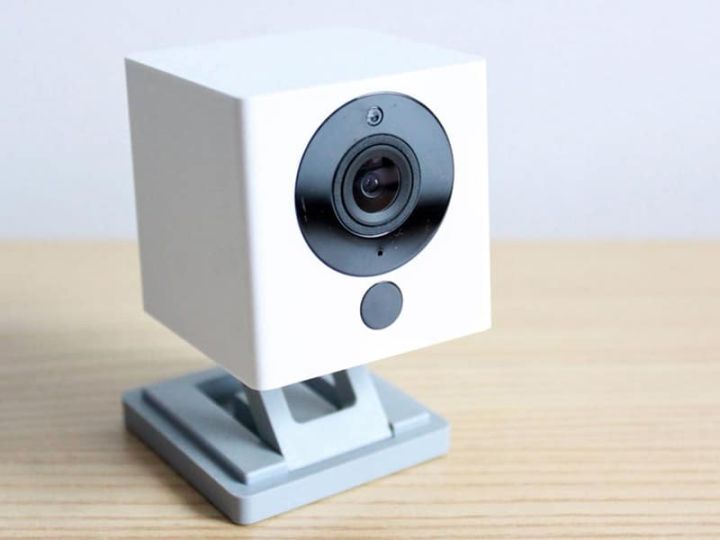
Using the IoT data that the sensors generated is where the real brainpower begins. Through the test of main functional device control and scenario management, its functions can operate normally on all Android devices and meet the expected objectives. At the same time, the relevant smart home management control interface can be displayed normally and meet the requirements on all mainstream models and mainstream systems. In this article, we’ve tried to cover the most important aspects of managing a smart home.
Author Services
In this article, DHT11 temperature and humidity sensor is used to collect the temperature and humidity in the house. It is a composite sensor that can collect both temperature and humidity . The smoke concentration sensor is specially used to observe whether the smoke concentration in the kitchen exceeds the safe range. Therefore, this article designs to use the smoke sensor MQ2 to detect the smoke concentration. The gas sensor has high sensitivity and adjustable sensitivity, and can respond to most smoke , especially for methane , the main component of natural gas used in the family. Support over 300,000 Smart Home controllers, 600 million device activity logs, and 150GB of data per day.
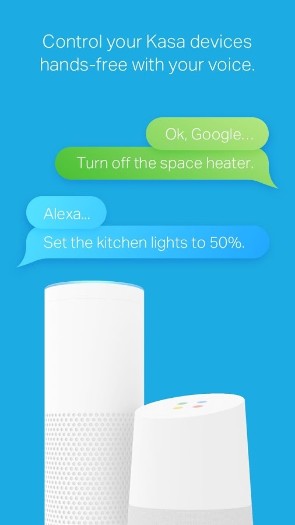
Some Assistant-equipped devices can handle basic commands offline, such as local settings or playing saved music. There is nearly limitless potential for smart home automation to alter the way that humans go about about their days. With innovations like smart kitchen appliances, custom weather forecasts and even personal robots, there is a plethora of devices that promise to help smart homes make our lives simpler.
Smart Home Device Stats
File storage system is the cornerstone of the whole smart home, which is very important for the efficient and smooth operation of related devices. This chapter mainly studies the data generated in the operation of smart home and analyzes the data to be stored, such as images and videos. Among them, video data are relatively large and can be directly stored in HDFS, and structured data such as video can be stored in distributed database HBase . At present, there are some problems in the distributed cache system and massive small file storage. This chapter designs a distributed cache system for caching hot data and a small file storage system for storing massive pictures. The embedded unit is the core of the whole smart home gateway equipment.
Today, we’ll analyze a data model we could use to store smart home data. Consumers that install smart home devices in their homes spend between $175 and $1,424 (a $749 average). Custom installations for large or luxury homes can cost anywhere from $2,000 to $150,000. Most consumers found smart homes to be more beneficial than expected. Convenience was the most cited benefit (75%), followed by usefulness (62%) and time savings (49%).
If a household has a smart home device, they tend to have several. From 2018 to 2021, the average number of smart home devices increased from 6 to 8. The high demand and rapid adoption of smart homes show that they’re highly valued by consumers. We provide smart home statistics showing benefits to consumers. The vast majority of home buyers say they would pay more money for a smart home. And 70% of home buyers are actively looking to buy smart homes.

If you prevent access, this can lead to functional limitations on the website. The provision of the aforementioned personal data is neither legally nor contractually mandatory. Without the IP address however, the service and functionality of our website are not guaranteed. Furthermore, individual services can be unavailable or limited. Device_parameters – We’ll use this attribute to store all possible device parameters (e.g. intervals for storing data) in a structured textual format.
Based on this data, users could create programs for their smart home. These programs are manually or automatically generated commands or even a series of commands that will do exactly what each user wants. Profiles are basically subsets of devices installed in every piece of real estate owned by the user. The idea is to enable a user to group their smart home devices in a suitable way.




No comments:
Post a Comment